Startup Awards in India 2026: Best Awards and How to Win
TLDR
Startup awards in India are recognition programs run by government bodies, industry associations, media houses, and independent organizations. They offer outcomes ranging from cash prizes and government work orders to investor credibility and hiring brand lift. The most useful awards publish their evaluation criteria, use independent juries, and deliver tangible benefits beyond a trophy. Founders should pick one or two high-signal programs per year rather than chasing every list.
Startup Awards in India: What They Are and Why They Matter
Startup awards in India are structured recognition programs designed to identify and reward high-potential startups and ecosystem enablers. They are run by central and state governments, industry associations like NASSCOM and CII, established media brands, corporates, and credible independent organizations. The outcomes vary widely, from cash prizes and curated handholding to government work orders, market access, and national visibility.
With India’s DPIIT-recognised startups crossing 2,12,000 entities as of January 2026, the ecosystem is crowded. Awards function as a filtering mechanism, both for the startups that win them and for the investors, procurement teams, and customers evaluating those startups.
If you are building a startup and exploring recognition programs, the startup awards category at National Awards India offers an independent, evidence-led track worth reviewing.
Why Founders Care About Startup Awards
Recognition matters, but not in the abstract. The practical reasons founders pursue startup awards in India come down to five use cases.
Fundraising signal. An award from a credible program tells investors that a third party vetted your claims. This is especially true for early-stage companies without revenue traction or brand recognition.
Government procurement on-ramp. Some award programs (like Maharashtra Startup Week) are gateways to paid pilots with state departments. Winning means revenue and a reference customer, not just a certificate.
Hiring brand. Named recognition from programs like ET Startup Awards or YourStory Tech30 gives founders a story to tell candidates. In a competitive talent market, this helps.
Structured feedback. Multi-stage jury processes force founders to articulate their business model, traction, and impact clearly. Even if you don’t win, the application process sharpens your pitch.
International showcases. Programs like the Global Startup Awards South Asia route Indian winners to continental and global finals, which helps with cross-border validation and partnerships.
Founders looking for individual leadership recognition alongside their company award can also explore entrepreneur-focused programs that evaluate the person behind the venture.
Types of Startup Awards in India
Not all award programs work the same way. Understanding the categories helps you match your goals to the right program.
Government Awards (Central)
The National Startup Awards (NSA), run by DPIIT through Startup India, is the highest-signal government recognition for startups in India. NSA 5.0 recognized 20 category winners on January 16, 2026. General category winners receive a cash prize of ₹10 lakh each, plus curated handholding and priority participation at flagship events. NSA 6.0 winners are planned for January 16, 2027.
State Procurement and Grant Programs
Some state programs blur the line between “award” and “procurement.” Maharashtra Startup Week selects 24 winners per edition, and each typically receives a government work order up to ₹15 lakh to pilot with a state department. This is revenue, not just recognition. Karnataka’s ELEVATE NxT is a deep-tech grant-in-aid program; the 2026 edition shortlisted 256 finalists.
For B2G startups, these state-level programs are often more valuable than a media trophy.
Industry Association Awards
NASSCOM Emerge 50 (Deeptech) spotlights 50 product startups annually with a jury that weighs technology readiness, IP, and commercialization. According to NASSCOM Deeptech’s cohort data, 78% of the 2026 winners were revenue-generating and 54% were at TRL 9, with Bengaluru leading by share. CII Startupreneur Awards, aligned to ICONN, offer industry-body credibility with published timelines and a nominal application fee.
Media and Independent Awards
ET Startup Awards carry strong brand effects for fundraising and hiring. In 2026, Groww won Startup of the Year, with category winners including Habuild (Bootstrap Champ), Varaha (Social Enterprise), and Theranautilus (Top Innovator). YourStory Tech30, unveiled at TechSparks each year, reaches early-stage tech founders seeking media visibility. Entrepreneur India Startup Awards cover fintech, deeptech, and spacetech categories.
Independent programs like National Awards India run cross-sector recognition with a published 100-point rubric and clear non-government positioning. For startups working at the intersection of technology and social impact, the innovation awards track offers a relevant parallel category.
Corporate and Partnered Awards
The Indus Appstore Emerging Startup Awards, launched in partnership with Startup India, create sector-specific visibility for app-led startups. These programs benefit from both government reach and corporate distribution.
Global and Regional Programs
The Global Startup Awards runs a South Asia route that sends Indian winners to continental and global finals. This is useful for startups with cross-border ambitions.
2026 Spotlight: Notable Programs and Outcomes
Here is a snapshot of the most significant startup award programs in India for the current cycle.
National Startup Awards (NSA 5.0): 20 category winners declared January 16, 2026. Categories included Best Deeptech (TriNano), Fintech Catalyst (Timble), Women-Led Innovator (Arivation), Circular Economy, and Urban Mobility, among others. Cash prize: ₹10 lakh per general category winner. NSA 6.0 applications target a January 16, 2027 winner announcement.
ET Startup Awards 2026: Groww was named Startup of the Year. Other winners: Habuild (Bootstrap Champ), Varaha (Social Enterprise), Mukund Jha (Comeback Kid), Armatrix (Best on Campus). The selection involves a curated longlist from ecosystem leaders and a closed-door jury.
NASSCOM Emerge50 2026: 50 deep-tech winners from 750 applications. Cohort stats: 86% funded, 78% revenue-generating, 54% at TRL 9. This is the kind of signal enterprise buyers and tech peers recognize.
Maharashtra Startup Week: 24 winners, each receiving up to ₹15 lakh in work orders for a state department pilot. Recognition that translates directly into paid public-sector work.
YourStory Tech30 2026: Cohort unveiled October 13 to 15 at TechSparks in Bengaluru. High media reach among tech audiences.
How to Tell What’s Credible
This is where most founders get tripped up. Practitioners on Reddit caution against “pay-to-win” or vanity lists, noting that credibility comes from who runs the program, transparency of the rubric, jury independence, and the signal it sends to investors and customers. Viral debates around certain “Under 30” lists have added to the skepticism, making it important to evaluate any award before applying.
Five Credibility Markers
Published rubric. Does the program disclose how it scores applications? Credible awards publish their evaluation framework. The National Startup Awards provide a guide document with criteria. National Awards India publishes a 100-point selection methodology with weights for impact, quality, leadership, consistency, and evidence integrity. If a program won’t tell you how decisions are made, that’s a red flag.
Jury independence. Multi-stage juries with named, independent panelists carry more weight than programs where the organizer is also the judge.
Edition cadence. Programs that run consistently year after year build a track record you can verify. Check past edition archives to see how a program has evolved.
Tangible benefits. Cash prizes, work orders, investor connects, and international showcases are more valuable than a dinner gala. Rank awards by what you actually get.
ASCI-safe usage. If you plan to advertise your win, ASCI requires you to name the awarding body, the month and year, and avoid implying blanket product superiority. Following ASCI’s guidelines for awards in advertising protects your brand from regulatory trouble.
“National” Does Not Always Mean “Government”
A common confusion: the word “national” in an award name does not mean it is a Government of India program. The National Startup Awards (NSA) by DPIIT is the official government startup award. Many independent programs use “national” in their branding. Check organizers, disclaimers, and terms before making claims in your pitch deck or ads. National Awards India, for instance, clearly states its independence from the Government of India on its site.
Shortlisting Framework: How to Pick the Right Award
Rather than applying to every program, score each award on these eight criteria (1 to 5 scale) and pick one or two per year.
Criteria
What to Evaluate
Organizer type
Government, statutory body, established media, corporate, or private?
Rubric clarity
Is there a written, verifiable evaluation framework?
Jury independence
Named panelists, multi-stage process?
Benefit certainty
Cash, pilot, work order, or just a certificate?
Relevance to your ICP
Does winning this award move the needle with your actual buyers?
Past winners’ quality
Are alumni credible companies you’d want to be grouped with?
Edition reputation
How many years has this run? Is there consistent coverage?
Timeline fit
Does the application window align with your fundraising or product cycle?
The Award ROI Stack
Think in tiers based on your go-to-market:
Tier 1 (Policy and industry): NSA, CII Startupreneur, NASSCOM Emerge50. These build procurement and investor trust.
Tier 2 (Media and hiring): ET Startup Awards, YourStory Tech30, Entrepreneur India Awards. These generate PR lift and attract talent.
Tier 3 (Sector visibility): Indus Appstore Awards, Aegis Graham Bell Awards, and vertical-specific programs. These create pilots and POCs in your niche.
Prioritize one per tier to avoid dilution. For deep-tech specifically, practitioners on LinkedIn note that peer-selected cohorts like NASSCOM Emerge50 and government recognitions (NSA, ELEVATE) tend to move the needle on enterprise trust and business development more than general media lists.
Ready to apply for a credible, independent startup award? Submit your nomination for the upcoming National Awards India edition.
Application Kit: What to Assemble
Once you have shortlisted your target awards, prepare these materials in advance. Most credible programs ask for overlapping evidence, so assembling this once saves time across applications.
Identity and compliance documents. DPIIT recognition certificate (when required), GST registration, sector-specific licenses (FSSAI, CE marks), and incorporation documents. Government programs like NSA require DPIIT recognition as a baseline.
Traction and impact metrics. Revenue, active users, retention rates, unit economics, deployment case studies, and letters of recommendation from customers. For government programs, show public value and implementation feasibility.
Technology and IP. Clear description of tech novelty, Technology Readiness Level (TRL), patents filed or granted, and any proprietary advantages. Deep-tech programs like NASSCOM Emerge50 specifically evaluate TRL and IP maturity.
Problem-impact narrative. A concise story connecting the problem you solve, your approach, and measurable outcomes. Evaluators across programs consistently score innovation depth, problem-solution fit, scalability, business model viability, and social or ecological impact.
Responsible communications plan. Before you win, decide how you will use the award in PR, pitch decks, and advertising. Keep ASCI guardrails in mind from the start.
A note from the community: practitioners on Reddit report that state scheme portals and communication can sometimes be bumpy. Always treat the live edition page of any program as the source of truth for dates, requirements, and status updates.
Calendar Anchors: 2026 to 2027
Align your award applications with your product and fundraising milestones.
Program
Key Date
Notes
NSA 6.0 (DPIIT)
Winners: Jan 16, 2027
Applications open months prior; check Startup India portal
ET Startup Awards
Ceremony: Sept/Oct 2026
Concluded for 2026; watch for 2027 cycle
YourStory Tech30
Unveil: Oct 13-15, 2026
At TechSparks, Bengaluru
NASSCOM Emerge50
Cohort announced: Aug 2026
Applications typically open Q1
National Awards India
Mumbai: Dec 5, 2026
Edition details and nominations now available
Maharashtra Startup Week
Varies by edition
Check MSInS portal for current cycle
Build a calendar linking product releases, fundraising sprints, and PR pushes to these anchors. Winning an award two weeks before a fundraise or a major customer pitch amplifies the signal.
For impact-focused startups, the changemakers awards track offers a category specifically designed for social impact organizations.
Frequently Asked Questions
Are paid startup awards in India worth applying for?
It depends on what you are paying for and what you get. Some credible programs charge a nominal application or participation fee and deliver real value (stage felicitation, winner communications, PR). The problem is programs that charge high fees with no published rubric or independent jury. Check the five credibility markers above before paying anything.
What is the difference between NSA and other “national” startup awards?
The National Startup Awards (NSA) by DPIIT is the Government of India’s official startup recognition program, with cash prizes and handholding. Other programs that use “national” in their name are typically run by independent organizations or media brands. Both can be credible, but they are different in origin and benefits. Always verify the organizer.
How should a startup use an award win in marketing and advertising?
Follow ASCI’s guidelines: name the awarding body, include the month and year of the award, and do not imply blanket product or service superiority. Keep the claim within 12 months of the award date for advertising purposes. Overclaiming erodes the very trust the award was supposed to build.
Can early-stage startups without revenue win awards?
Yes. Programs like YourStory Tech30 and certain NSA categories evaluate innovation, team strength, and potential alongside traction. State grant programs like ELEVATE NxT also consider pre-revenue deep-tech startups. Match your stage to the right program.
How many startup awards should a founder apply for each year?
One or two high-signal awards per year is better than five mediocre ones. Pick based on the ROI stack: one from the policy or industry tier, one from the media tier. Spreading thin dilutes your preparation quality and the impact of each win.
What documents do most credible startup award programs require?
DPIIT recognition (for government programs), statutory registrations, revenue or traction data, IP filings, customer testimonials or letters of recommendation, and a clear problem-impact narrative. Assemble these once and adapt per application.
When is the next National Awards India edition?
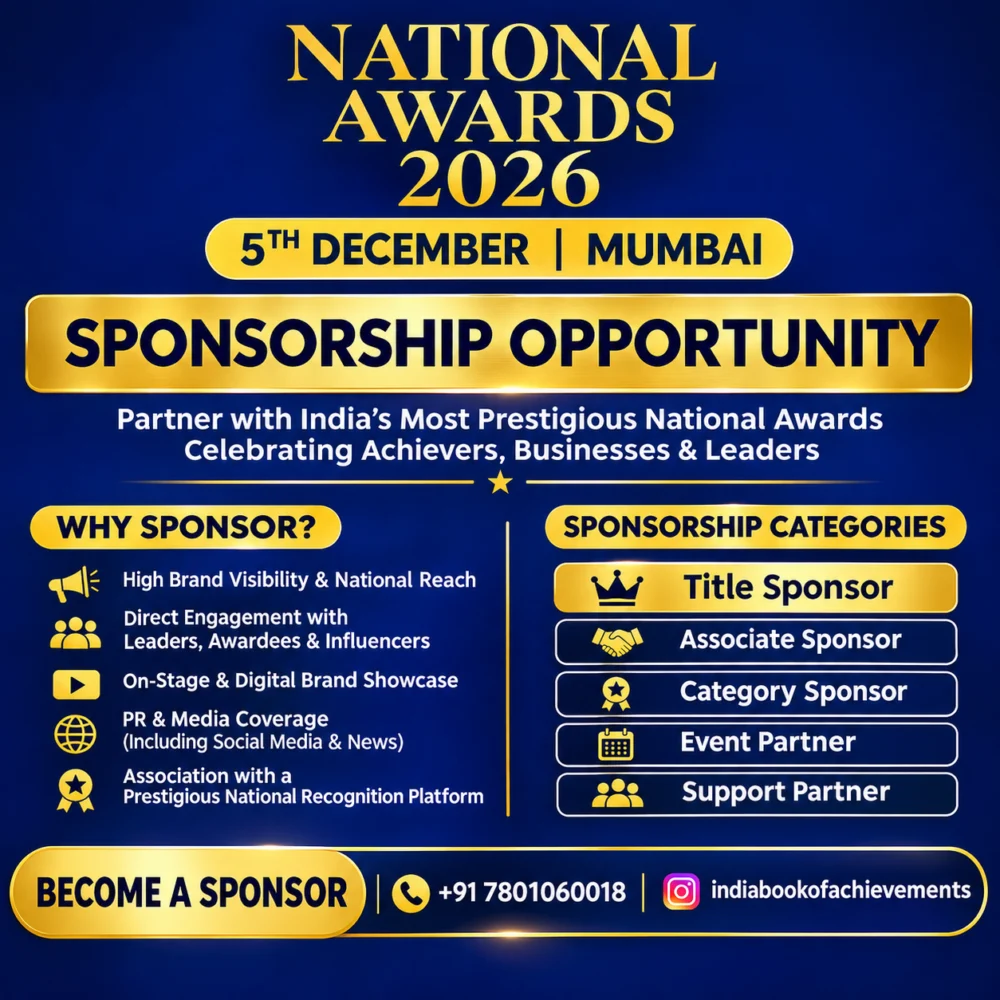
The next umbrella edition of National Awards India is scheduled in Mumbai on December 5, 2026, covering multiple categories including startups, innovation, entrepreneurs, and business. Visit the nomination page for current details and eligibility.
For current category details, visit the National Startup Awards page and selection methodology. The event schedule and nomination process are listed on the National Awards 2026 page.